
- 16%
AudioControl THREE.2
4 495 SEK/ST3 795 SEK/ST
Lägsta pris de senaste 30 dagarna4 495 SEK/STSometimes old school is cool. AudioControl's THREE.2 is an in-dash equalizer and a whole lot more, allowing you to control almost every aspect of your receiver's output from the driver's seat. It starts with three bands of equalization — high, midrange, and midbass — and then adds a fourth band, called Para-BASS®, that'll fine-tune the low frequencies to get the bass popping the way you like. Front and rear auxiliary inputs let you plug in a couple of outside music sources like a satellite radio receiver and your iPod®.
- Betala säkert med kort
- Maila oss, vi svarar snabbt!
- Betala med Klarna
- TillverkareAudioControl
- VarumärkeAudioControl
Beskrivning
Art.nr: THREE.2
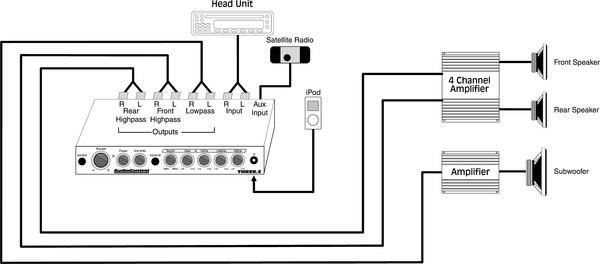
The THREE.2 is a combination equalizer/preamp/crossover/line driver. The 1/2 DIN chassis can be mounted in-dash, or under-dash using the included brackets.
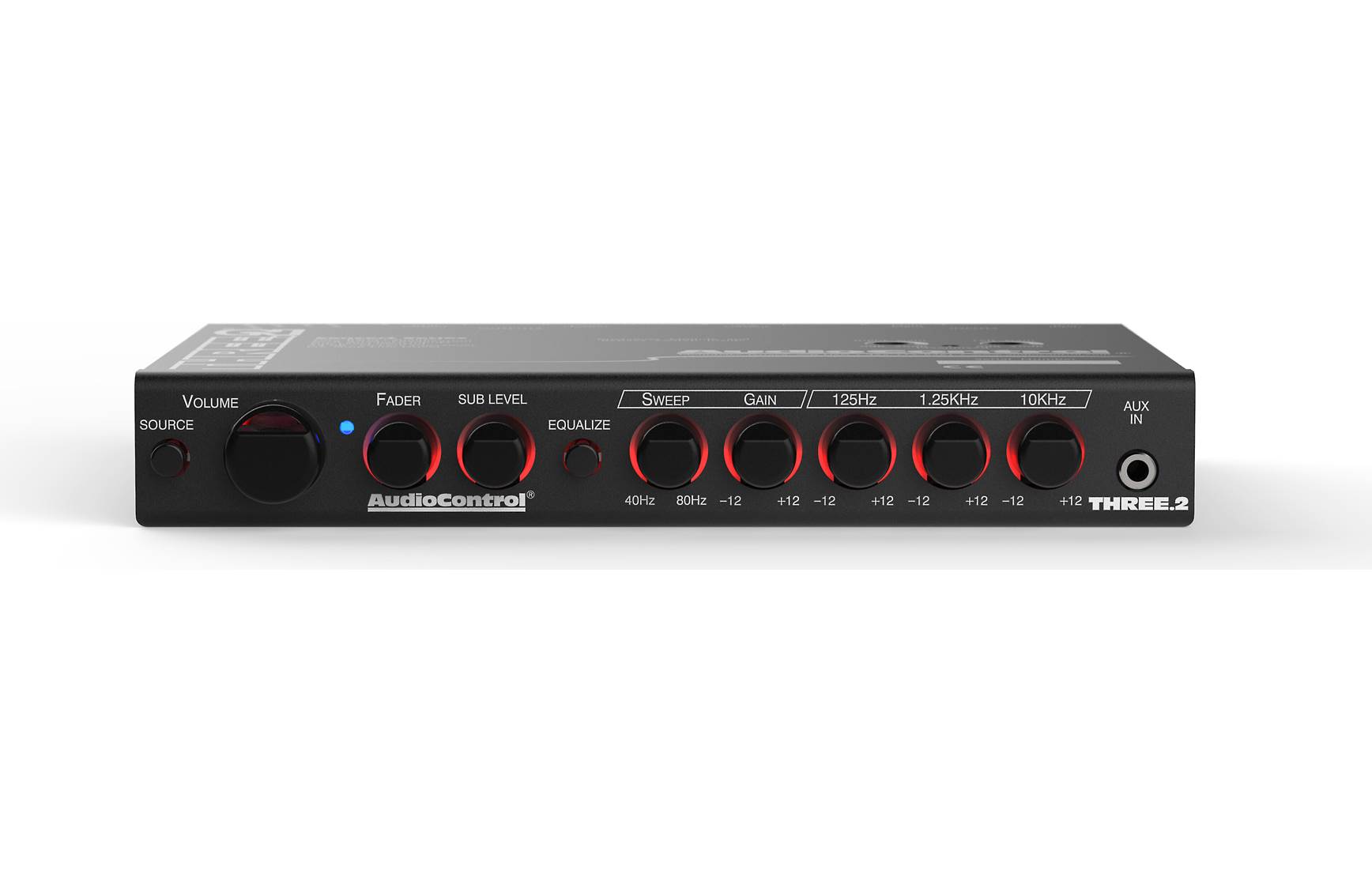
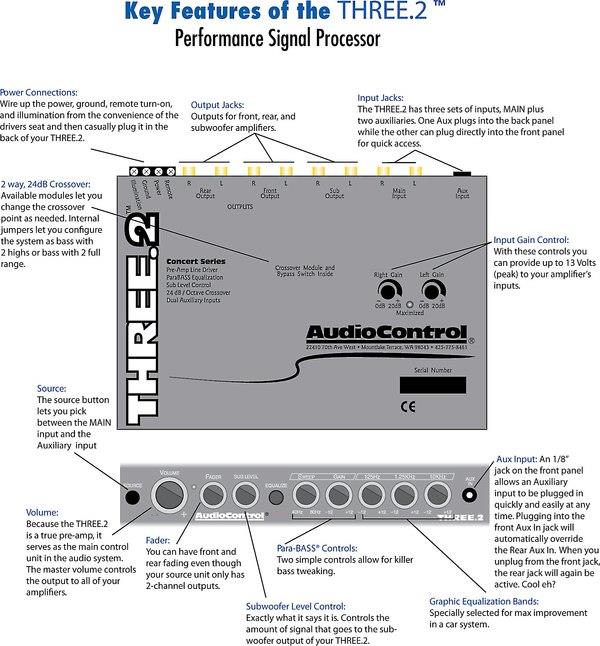
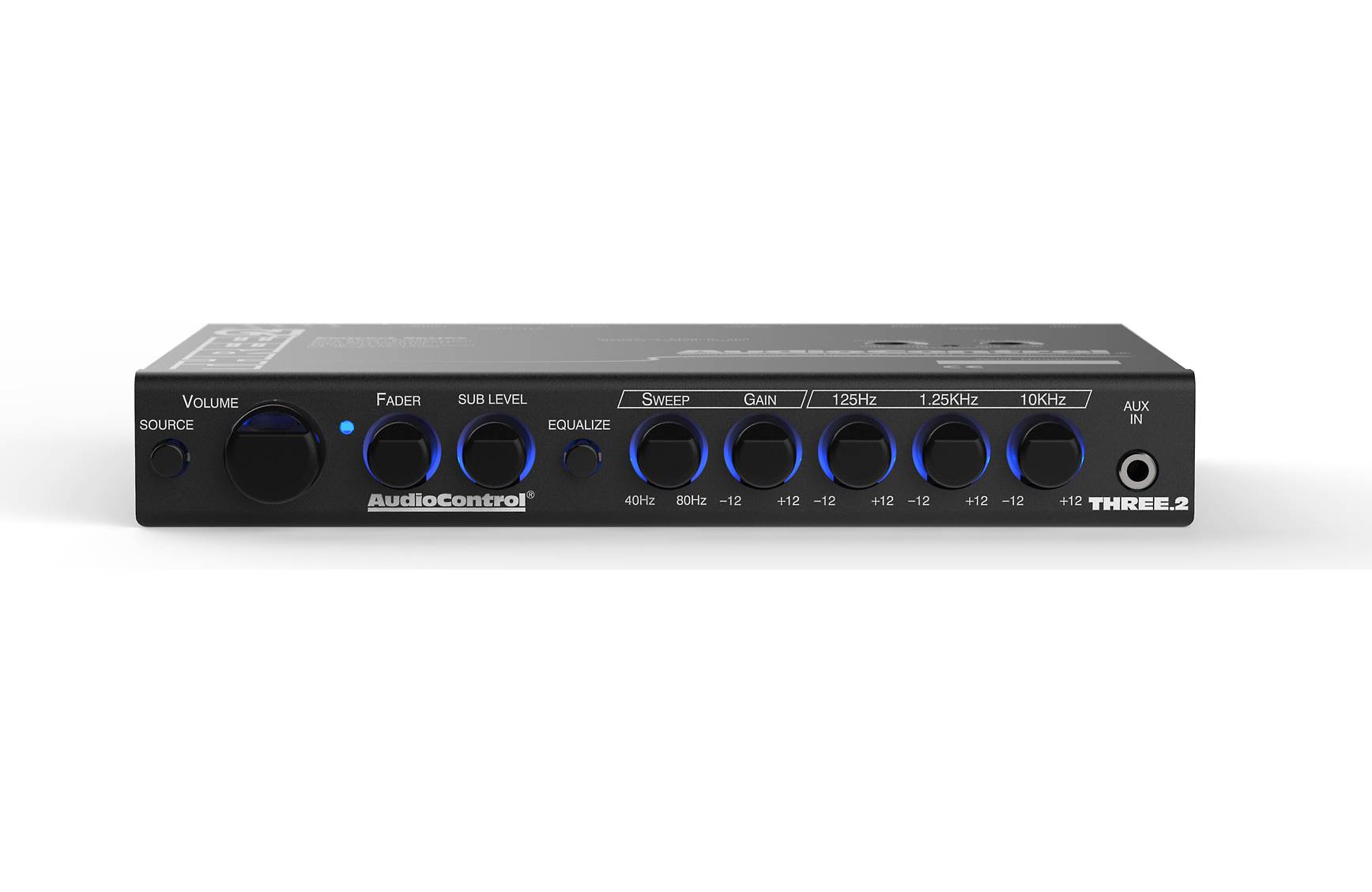
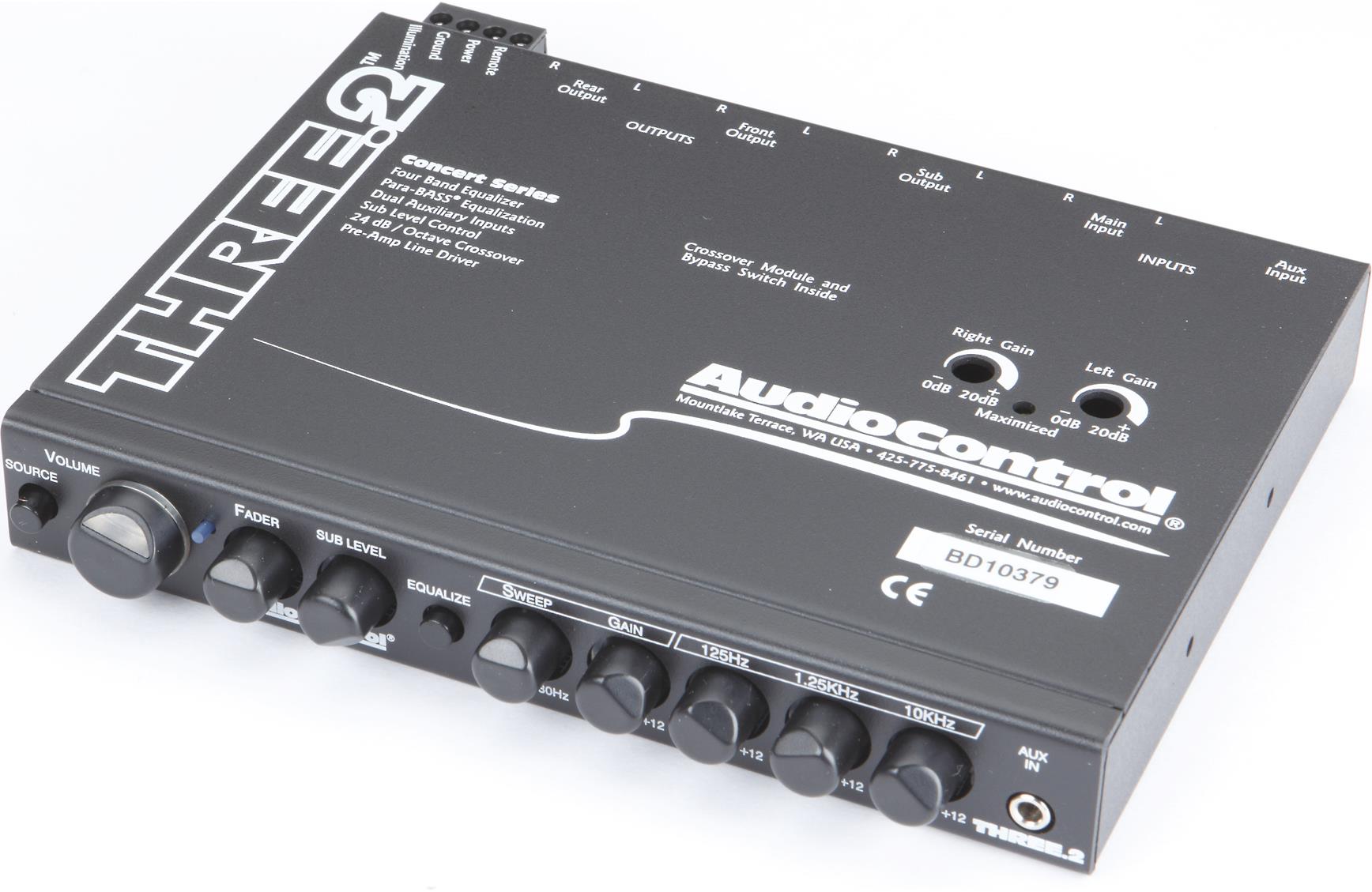
3 Band Graphic EQ: The rotary knobs adjust the signal +/-12 dB at 125 Hz, 1.25 kHz, and 10 kHz. There's a notch at each knob's center position so it's easy to return to the flat setting.
Para-Bass: Para-Bass is a single band, parametric equalizer for the bass output. Like the three graphic EQ bands, the adjustment range is +/-12 dB; the center frequency is continuously variable from 40 Hz to 80 Hz.
Crossover: The THREE.2 has built-in high-pass and low-pass crossovers. The high-pass is applied to the front and rear line outputs. The low-pass is applied to the subwoofer output. The crossover slope is 24 dB/octave and the factory crossover point is 90 Hz; the crossover point is governed by a replaceable chip; replacement chips range from 30 Hz to 3,500 Hz. The crossover can also be bypassed if you're not using a subwoofer, sending a full range signal to the front and rear outputs.
Line Driver: To achieve the best possible signal to noise ratio and dynamic range, the built-in line driver can increase the head unit's output voltage up to 20 dB (up to 9.5 volts RMS/13 volts peak).
Volume: If you choose, you can adjust the system volume using the THREE.2's volume knob. This allows you to leave the source volume at it's maximum un-clipped level, resulting in the best signal to noise ratio and dynamic range output from the source.
Subwoofer Level Control: The relative subwoofer volume is adjusted using the rotary Sub Level control on the front panel.
Fader: Because there is only one stereo line input and both front and rear line outputs, the front panel fader knob is needed to adjust the relative front and rear volume.
Auxiliary Inputs: The THREE.2 has two auxiliary inputs, 3.5mm mini-jacks on the front and rear panels. When a cable is plugged into the front panel input, it overrides the rear panel input. The front panel Source button switches between the auxiliary inputs and the RCA line input.
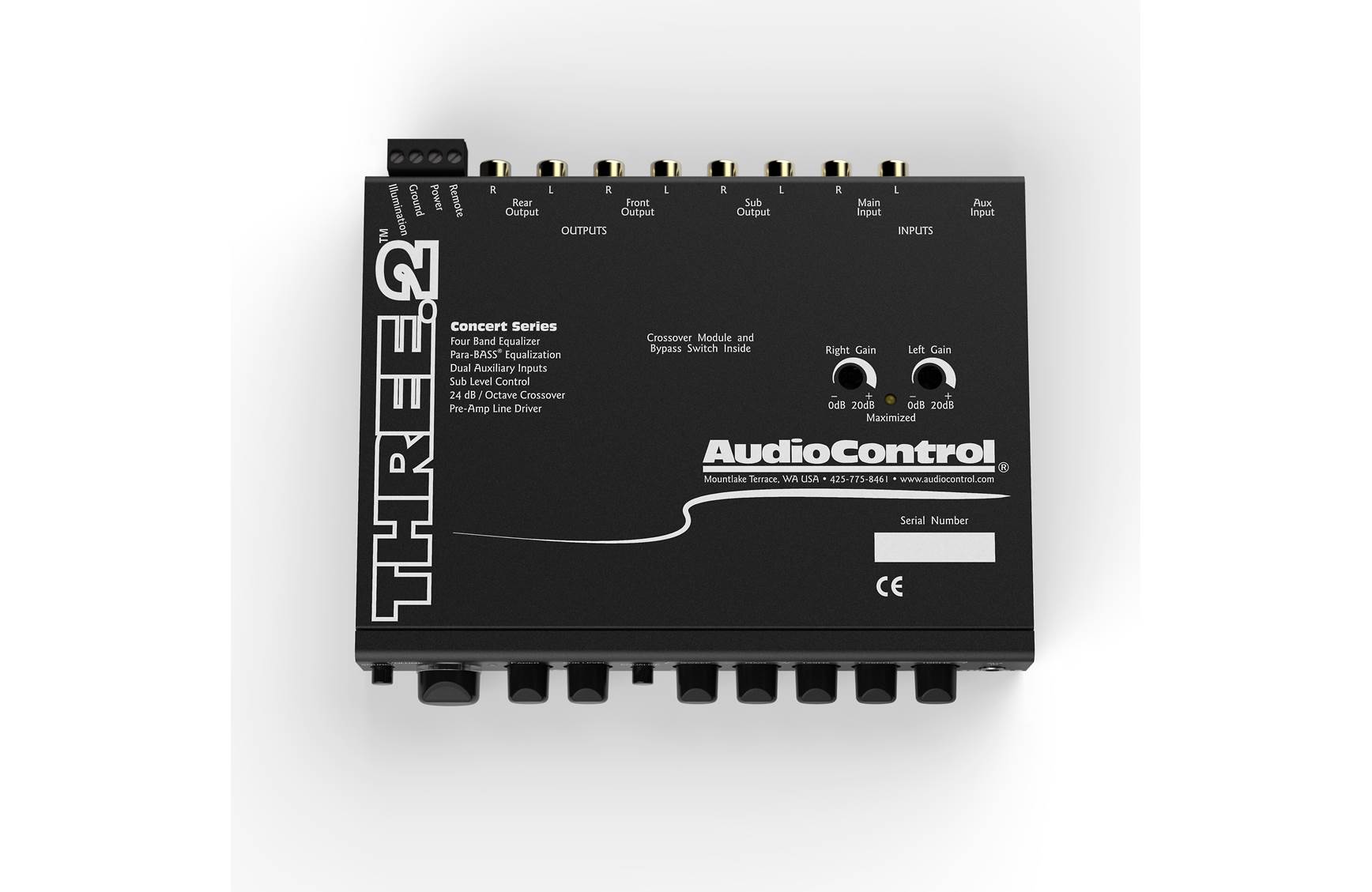
Input Gain: The input gain for the left and right channels is set independently; 0 dB to +20 dB. The +20 dB gain allows you to increase the head unit's line voltage to the top of your amp's input range; up to 9.5 volts RMS/13 volts peak. A yellow Maximized LED starts to flicker as you reach the maximum unclipped voltage.
Balanced Input: Using the balanced differential input circuit may cancel noise picked up in the transmission line between the THREE.2 and the source unit.
Ground Isolation: The power supply ground is switchable, in case of ground loop noise. The factory position is fully isolated (typically the best choice), but can be changed to Ground or 200Ω.
Terminal Blocks: The power/ground/remote/illumination terminal is removable; the wiring is attached to the block, then the block is plugged into the rear panel of the THREE.2.
Illumination: The outer ring of each knob is lit whenever the illumination terminal is energized. The color is switchable between blue and red. Wiring the illumination terminal to a dimmer circuit allows you to adjust the brightness.
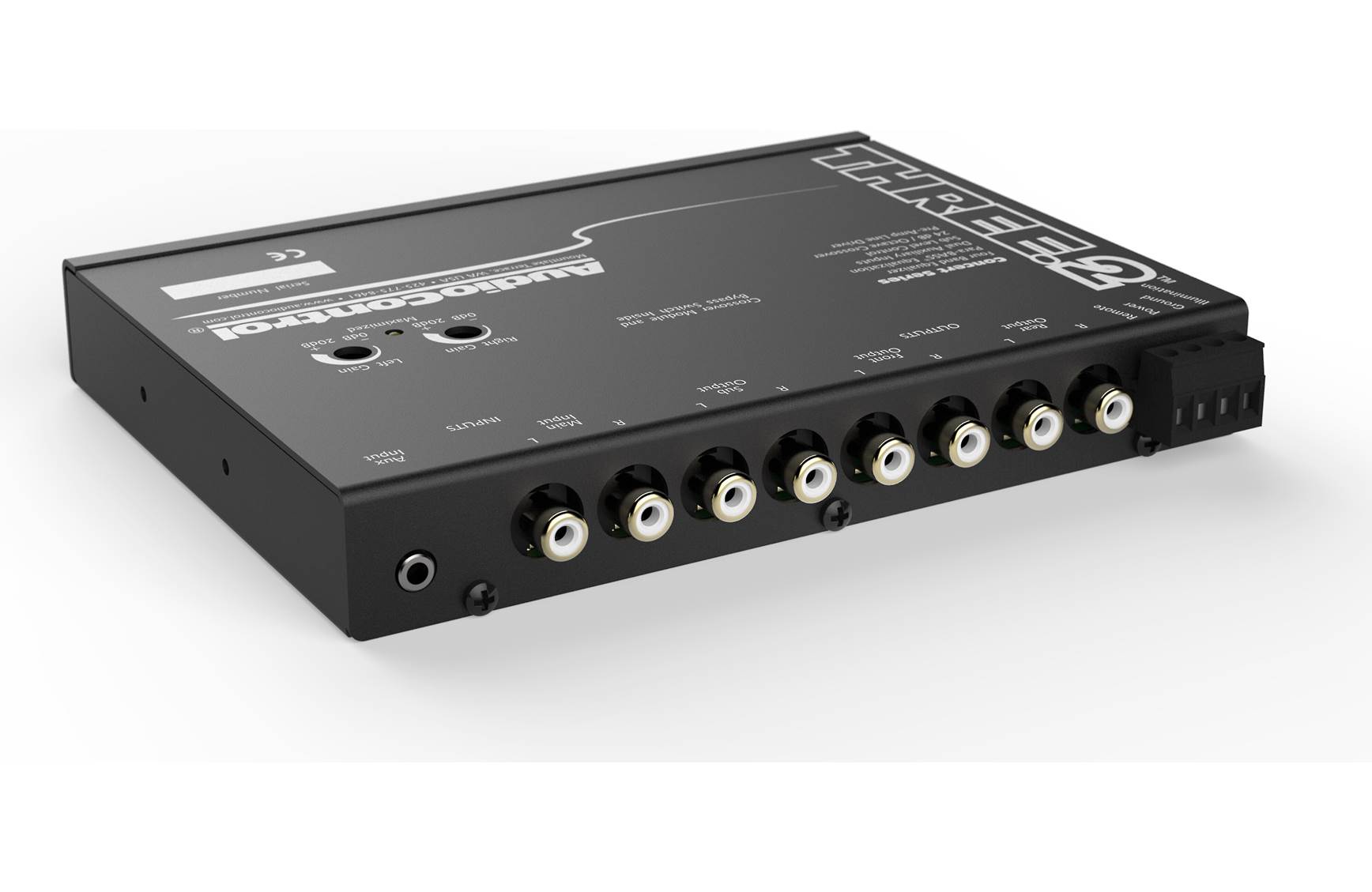
Inputs:
RCA main input; rear panel
Auxiliary 3.5mm mini-jack; rear panel
Auxiliary 3.5mm mini-jack; front panel
Outputs:
Front outputs; RCA; rear panel
Rear outputs; RCA; rear panel
Subwoofer outputs; RCA; rear panel
Filer och media
 | Bifogad fil |